
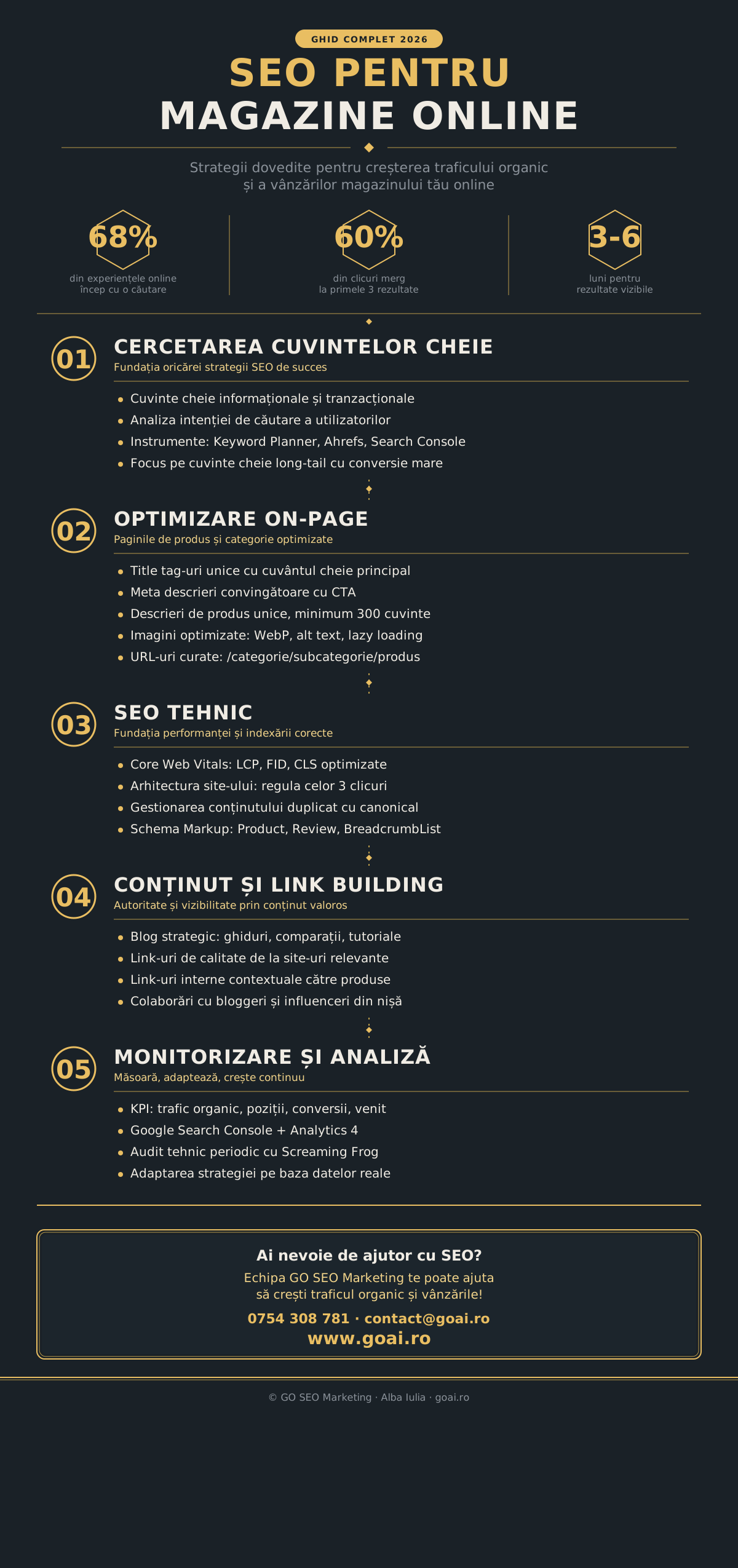
SEO for online stores, complete optimization guide. Why SEO is essential for online stores in 2026. Because in Romania the digital world is increasingly competitive, online stores that do not invest in SEO risk remaining invisible to potential customers. According to recent studies, over 68% of online experiences begin with a Google search, and the top three organic results capture approximately 60% of all clicks.
 How SEO Works for Online Stores: Fundamental Principles
SEO for online stores differs significantly from optimizing a blog post or a business website. An online store has hundreds or thousands of product pages, complex categories, and a structure that needs to be carefully managed to maximize organic visibility.
How SEO Works for Online Stores: Fundamental Principles
SEO for online stores differs significantly from optimizing a blog post or a business website. An online store has hundreds or thousands of product pages, complex categories, and a structure that needs to be carefully managed to maximize organic visibility.
SEO for Online Stores
For online store owners, this means one simple thing! If your products don't appear in the top search engine results, you lose sales every day. SEO is no longer just an option, but a strategic necessity for any e-commerce business that wants to grow sustainably. In this article, you will discover concrete and applicable SEO optimization strategies, specially designed for online stores. From optimizing product pages to link building and advanced technical strategies, each section provides you with practical tools that you can implement immediately. How SEO Works for Online Stores: Fundamental Principles
SEO for online stores differs significantly from optimizing a blog post or a business website. An online store has hundreds or thousands of product pages, complex categories, and a structure that needs to be carefully managed to maximize organic visibility.
The Three SEO Pillars for Online Stores
Any solid SEO strategy for an online store is based on three essential components that work synergistically:- On-page SEO: optimizing content, titles, meta descriptions and images on each product and category page.
- Technical SEO: ensuring that your site is fast, mobile-friendly, easy to index and free from technical errors that can affect rankings.
- Off-page SEO: building domain authority through quality links, brand mentions and social media presence.
Key Differences from Traditional SEO
Online stores present unique challenges that a regular website does not face. Duplicate content generated by product filters, extended pagination, and product variations are just some of the e-commerce specific issues. Also, search intent is different. Users searching for products often have a commercial or transactional intent, which means optimization should focus on conversion, not just traffic.Keyword Research for Online Stores
Keyword research is the foundation of any successful SEO strategy. For an online store, this process must be more granular and more focused on user purchase intent.Essential Keyword Types for E-commerce
Not all keywords are created equal. For online stores, it's crucial to understand the different types of keywords and their role in the sales funnel:- Informational keywords: users search for information ("how to choose a gaming laptop"). Ideal for blog posts and buying guides.
- Navigation keywords: users search for a specific brand or store ("emag laptops"). Important for brand visibility.
- Commercial keywords: users compare products ("best phones under 2000 lei"). Excellent for category pages.
- Transactional keywords: users are ready to buy ("buy iPhone 15 Pro Max"). Essential for product pages.
Research Tools and Techniques
To identify the most valuable keywords for your online store, you can use a combination of free and paid tools:- Google Keyword Planner: ideal for estimating search volume and competition
- Google Search Console: shows which keywords you already rank for in search results
- Ubersuggest or Ahrefs: for competition analysis and discovering new opportunities
- Google autocomplete: a free and valuable source of long-tail keywords
- Google "Related searches" section: provides additional ideas directly from users
On-Page Optimization for Product and Category Pages
Product and category pages are the heart of any online store. Optimizing them correctly can make the difference between being on Google's first page or remaining buried in results.Optimizing Titles and Meta Descriptions
The title tag is one of the most important SEO signals. For product pages of an online store, follow this recommended structure:- Include the main keyword at the beginning of the title
- Add unique benefits or attributes of the product
- Keep the title between 55 and 60 characters
- Each page must have a unique title
SEO-Optimized Product Descriptions
Product descriptions represent one of the biggest SEO opportunities for online stores, but also one of the most neglected. Avoid using supplier descriptions, as they create duplicate content. An optimized product description must be unique, contain at least 300 words and naturally integrate relevant keywords. Structure descriptions using short paragraphs, benefit lists, and technical specifications.Product Image Optimization
Images play a crucial role in the user experience on an online store, but can negatively affect SEO performance if not optimized properly. Here are the essential steps:- Use descriptive file names (e.g., "white-nike-air-max-sneakers.jpg" instead of "IMG_1234.jpg")
- Add descriptive and relevant alt text for each image
- Compress images without losing quality using modern formats like WebP
- Implement lazy loading to improve page loading speed
URL Structure for E-commerce
Clean and descriptive URLs are essential for SEO of an online store. The ideal structure follows the site hierarchy: domain.ro/category/subcategory/product-name. Avoid URLs with complex parameters or product codes.Technical SEO: The Foundation of Performance for Online Stores
Technical SEO is often neglected by online store owners, but it is absolutely essential. A site with technical issues will not perform well in search, regardless of how good the content is.Page Speed and Core Web Vitals
Google uses Core Web Vitals as a ranking factor. For an online store with many images and complex functionality, speed can be a major challenge. Prioritize the following optimizations:- Largest Contentful Paint (LCP): optimize the main product image to load in under 2.5 seconds
- First Input Delay (FID): minimize JavaScript that blocks user interaction
- Cumulative Layout Shift (CLS): define dimensions for images and dynamic elements to prevent content shift
Site Architecture and Navigation
The structure of an online store should be logical and intuitive, for both users and search engines. Apply the three-click rule: any product should be accessible in a maximum of three clicks from the homepage. Implement breadcrumbs on all pages to help users navigate and provide Google with additional information about your site's structure. Breadcrumbs can also appear in search results, improving CTR.Managing Duplicate Content
Duplicate content is one of the most common SEO problems for online stores. Product filters, sorting, and pagination can generate hundreds of URLs with identical or very similar content. Solutions include:- Using canonical tags to indicate the preferred version of a page
- Blocking filter and sort parameters in robots.txt or through noindex
- Implementing pagination with rel="next" and rel="prev"
- Creating unique content for each category page
Schema Markup for E-commerce
Structured data (Schema Markup) helps search engines better understand your online store's content and can generate rich snippets in search results. The most important Schema types for e-commerce are:- Product: for product information (price, availability, SKU)
- Review and AggregateRating: for reviews and star ratings
- BreadcrumbList: for hierarchical navigation
- FAQPage: for FAQ sections on product pages
- Organization and LocalBusiness: for company information
Content Strategy and Link Building for Online Stores
An online store cannot rely exclusively on product pages to attract organic traffic. A well-thought-out content strategy and a solid link profile are essential for increasing authority and visibility.Strategic Blogging for E-commerce
The blog is one of the most powerful SEO weapons for an online store. Blog posts attract informational traffic, build authority in your niche, and create natural opportunities for internal links to product pages. Types of content that work great for online stores:- Detailed buying guides ("How to Choose the Best Robot Vacuum in 2025")
- Product comparisons ("iPhone 15 vs Samsung S24: which is better?")
- Tutorials and how-tos related to your products
- Curated lists ("Top 10 gifts for her under 200 lei")
- Articles about industry trends
Effective Link Building for E-commerce
Building quality links is essential to increase the domain authority of your online store. However, link building strategies for e-commerce require a specific approach:- Create valuable content that naturally attracts links (infographics, studies, detailed guides)
- Collaborate with bloggers and influencers in your niche for product reviews
- List your store in relevant and quality business directories
- Recover brand mentions without links and request the addition of a hyperlink
- Provide testimonials to your suppliers in exchange for a link from their site
Internal Links: Structure That Boosts Performance
Internal links are one of the most underestimated SEO tools for online stores. A good internal linking strategy distributes authority evenly across the site and helps Google discover and index all important pages. Create contextual links from blog posts to product and category pages. Use descriptive and relevant anchor text, not generic phrases like "click here". Make sure each product page receives at least 2-3 internal links.Monitoring, Analysis and Continuous Improvement
SEO for online stores is not a one-off project, but an ongoing process. Constant performance monitoring and strategy adaptation are essential to maintain and improve search positions.Essential KPIs to Track
To evaluate the effectiveness of your online store's SEO strategy, constantly monitor the following indicators:- Organic traffic: the number of visitors coming to your site from organic search
- Positions for target keywords: evolution of rankings over time
- Conversion rate from organic traffic: how many organic visitors become buyers
- Revenue generated from organic traffic: the direct financial impact of SEO
- Click-through rate (CTR): the percentage of users who click on your results
- Number of indexed pages: how many pages are in Google's index
Recommended Monitoring Tools
Use a combination of tools to get a complete picture of your online store's SEO performance:- Google Search Console: free, essential for monitoring indexing and search performance
- Google Analytics 4: for analyzing traffic, user behavior, and conversions
- Ahrefs or SEMrush: for monitoring positions, competition analysis, and technical audit
- Screaming Frog: for site crawling and identifying technical issues
Frequently Asked Questions About SEO for Online Stores
How long does it take to see SEO results for my online store?
SEO results for an online store typically begin to appear after 3-6 months of consistent work. However, this timeline depends on competition in your niche, your domain's current authority, and resources invested. New online stores may need 6-12 months to see significant results, while sites with existing authority may see improvements faster.What is the cost of SEO for an online store?
SEO costs vary significantly depending on the size of your online store, competition in your niche, and business objectives. A realistic budget for a medium-sized online store starts at 500-1000 EUR per month. It's important to view SEO as a long-term investment, not an expense, because the organic traffic generated is sustainable and doesn't require payment per click.Can I do SEO myself for my online store?
Yes, you can implement many basic SEO optimizations yourself, especially with the help of guides and free tools available. However, for an online store with hundreds or thousands of products, it's recommended to hire SEO specialists who can handle the technical and strategic complexity. A hybrid approach works well: implement basic optimizations in-house and outsource advanced strategy.What e-commerce platform is best for SEO?
No platform is perfect from an SEO perspective, but some offer better functionality. WooCommerce (WordPress) offers the most SEO flexibility due to its plugin ecosystem. Shopify has significantly improved SEO functionality in recent years. Magento/Adobe Commerce is suitable for large online stores. Regardless of platform, correct implementation of SEO principles matters most.How do I manage expired or unavailable products without hurting SEO?
Managing expired products is a common challenge for online stores. If the product will return to stock, keep the page active with an unavailability notice and notification option. If the product is permanently discontinued, redirect the URL with a 301 redirect to a similar product or relevant category. Don't simply delete the page, as it will generate 404 errors and you'll lose the authority accumulated by that page.Conclusion: Transform Your Online Store Into an Organic Traffic Machine
SEO for online stores is a complex process, but the rewards are proportional. By applying the strategies in this guide: from keyword research and on-page optimization, to technical SEO and link building: you can transform your online store into a constant source of organic traffic and sales. Success in SEO comes from consistency and continuous adaptation. Start with fundamental optimizations, monitor results, and adjust your strategy as you learn what works best for your audience and niche. Remember: every day your online store is not optimized for search engines is a day you lose potential customers to the competition. The sooner you start, the sooner you'll see results. Do you need help with SEO for your online store? The GO SEO Marketing team from Alba Iulia can help you increase organic traffic and sales. Contact us for a free SEO analysis of your online store! Phone: 0754 308 781 | Email: contact@goai.ro | Website: www.goai.roHow this article was made
- Author
- Dorel Tănase
- Published
- 22 February 2026
- Last updated
- 18 September 2026
- Sources
We work by our publishing principles, corrections policy, ethics policy.